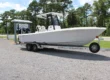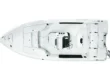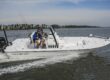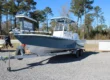

Ask ten redfish anglers what makes the perfect boat and you’ll get ten answers — but spend enough time on Lowcountry water and a few features keep rising to the top. Chasing reds around McClellanville means skinny flats one minute and a windy bay the next, and the right boat handles both without making you choose. Here’s what actually matters when you’re picking a redfish rig.
Shallow draft above all
Redfish love skinny water, especially on a low tide when they’re tailing up on the flats. If your boat can’t get up there without spooking everything or running aground, you’re missing the best of it. A shallow draft is the single most important feature for inshore redfishing here — it’s what gets you into the fish other boats can’t reach.
A quiet, stable casting platform
Reds in clear, shallow water are spooky. A boat that bangs, hums, or rocks under your feet announces your arrival from a hundred yards out. You want a stable hull you can stand and cast from comfortably, a clean foredeck without trip hazards, and as little hull slap as possible. The quieter the boat, the closer you get.
A good trolling motor with spot-lock
This is the unsung hero of redfishing. A capable trolling motor lets you ease along a grass line or oyster bank without firing up the outboard, and spot-lock holds you in place over a school or against the current so you can keep casting instead of fighting the boat. Once you fish with one, you won’t want to go back.
Enough boat for the bay
Here’s where a lot of pure skiffs fall short around here. Our flats sit right next to open water like Bulls Bay, and that water can turn choppy fast. A redfish boat that can only handle a calm flat leaves you stranded — or soaked — when the wind comes up. You want enough freeboard and hull to make that run home comfortably. That balance is exactly why the bay boat is so popular for Lowcountry redfishing.
Smart storage and a livewell
Dry storage for tackle and gear, easy-to-reach rod holders, and a livewell that keeps bait frisky all day round out a good redfish boat. None of it is glamorous, but you’ll appreciate every bit of it on the water.
Putting it all together
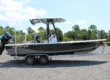
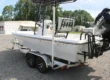
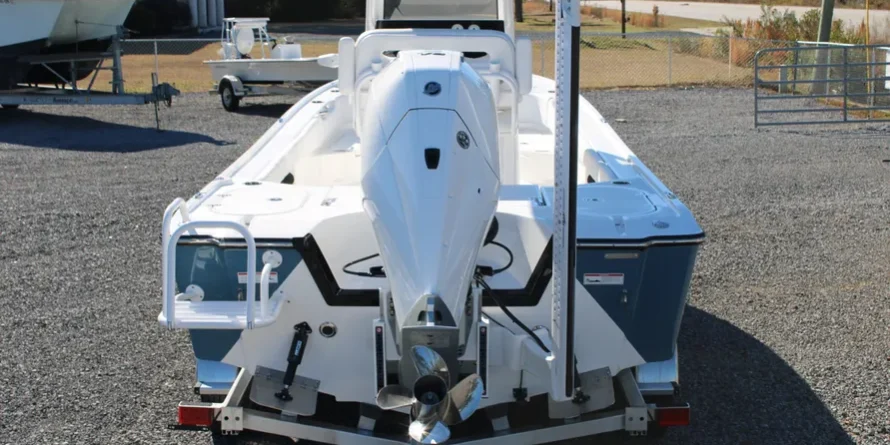
The ideal Lowcountry redfish boat runs shallow, floats quiet and stable, carries a good trolling motor, and still has the backbone to handle the bay. That’s a tall order for a skiff and overkill for a big center console — which is exactly the gap a well-built bay boat fills. Our Blazer bay boats are set up for precisely this kind of fishing. Come see the current models or reach out and we’ll help you build the redfish boat you’ve been picturing.
Frequently Asked Questions
What makes a good redfish boat?
The big ones are a shallow draft to reach fish on the flats, a quiet and stable casting platform, a trolling motor with spot-lock, and enough hull to handle open water. Smart storage and a good livewell round it out. A bay boat balances all of these well.
How shallow does a redfish boat need to be?
Shallow enough to reach tailing reds on a low tide without spooking them or running aground. Draft varies by model and rigging, so stop by and we can walk you through the numbers on the boats we carry.
Why is a trolling motor important for redfishing?
A trolling motor lets you ease quietly along grass lines and oyster banks without the outboard, and spot-lock holds you over a school or against the current so you can keep casting. It’s one of the most valuable features for inshore redfishing.
Is a bay boat or a flats skiff better for redfish?
A skiff wins on pure shallow-water stealth, but our flats sit next to open water that gets choppy. A bay boat runs shallow enough for the flats yet handles the bay, which makes it the more versatile all-around redfish boat here.
What boats do you recommend for Lowcountry redfishing?
We carry Blazer bay boats set up specifically for this kind of inshore fishing — shallow, quiet, and capable in open water. Contact us and we’ll help you spec the right one for how you fish.