
Buying a used boat to save a few dollars sounds smart — and sometimes it is. But a boat isn’t a car, and a saltwater boat especially can hide problems that don’t show up until you’re already on the water and already out the money. Before you decide between new and used, here’s what we’d want a friend to know.
The real appeal of used
Let’s be fair: a good used boat can be a great deal. Someone else absorbed the initial depreciation, and if the previous owner took care of it, you might get a lot of boat for the money. If your budget is firm and you’re patient enough to wait for the right one, used is a legitimate path — we’re not here to talk anybody out of it.
Where used boats bite people
The trouble is what you can’t see. Saltwater works on a boat from the inside out. A hull can look fine and still have moisture in the transom or stringers. Wiring corrodes behind panels. An engine with low advertised hours might have skipped every service it ever needed. By the time those things surface, the warranty is long gone and the repair bill is yours alone. We’ve seen folks spend “bargain” money up front and then double it in repairs the first year.
What a new boat really buys you
New isn’t just about that fresh-boat feeling. You’re buying a full factory warranty, a clean history with zero hidden surprises, the latest hull and rigging improvements, and the ability to spec the boat exactly the way you fish instead of settling for someone else’s choices. For a lot of buyers, the peace of mind alone is worth the difference — especially on a boat you plan to keep and run hard for years.
If you do buy used, protect yourself
Going the used route? A few rules go a long way. Get a professional inspection before you hand over a dime — a marine tech can spot transom rot, corrosion, and engine issues you’d never catch in a test drive. Ask for service records. Run the motor and watch the telltale stream, listen to it idle, and put it under load if you can. And budget for some immediate maintenance, because nearly every used boat needs a little catching up.
How to make the call
It really comes down to your budget, your risk tolerance, and how long you plan to keep the boat. If you want certainty, the latest features, and a warranty behind you, new is the safer bet. If you’re disciplined, patient, and willing to inspect carefully, a good used boat can serve you well.
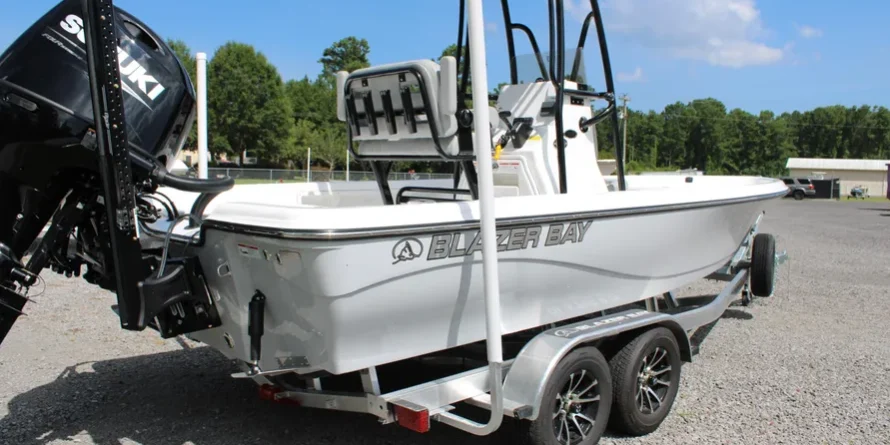
Either way, talk to people who do this for a living before you sign anything. We’re happy to look over a used boat you’re considering, and if new turns out to be the better move, our new Blazer bay boats are built for exactly the water we fish around here. Take a look at the Blazer lineup and reach out — we’ll help you make a smart buy, new or used.
Frequently Asked Questions
Is it better to buy a new or used bay boat?
It depends on your budget, risk tolerance, and how long you’ll keep the boat. New gives you a warranty, no hidden history, the latest features, and a custom spec. A good used boat can save money if you inspect it carefully. We can help you weigh both.
What problems should I look for in a used saltwater boat?
Hidden moisture in the transom or stringers, corroded wiring behind panels, and an engine that skipped its services are the big ones. They often don’t show up in a quick test drive, so a professional inspection before you buy is essential.
Should I get a used boat inspected before buying?
Absolutely. A marine technician can spot transom rot, corrosion, and engine issues you’d never catch on your own, and review service records. It’s a small cost that can save you from a very expensive mistake.
What does buying a new boat get me over used?
A full factory warranty, a clean history with no hidden surprises, the latest hull and rigging, and the ability to spec the boat exactly how you fish. For many buyers, that peace of mind is worth the price difference.
Can you help me evaluate a boat before I buy it?
Yes. We’re glad to look over a used boat you’re considering, and if a new boat turns out to be the better move, we can match you to the right Blazer model. Contact us before you sign anything.